Why a Lasting Power of Attorney is easier to set up while nobody needs it
A Lasting Power of Attorney lets someone you trust handle your money or care decisions if you cannot. It has to be made while you still have mental capacity, and the 2026 fee is far lower than the court route families face without one.
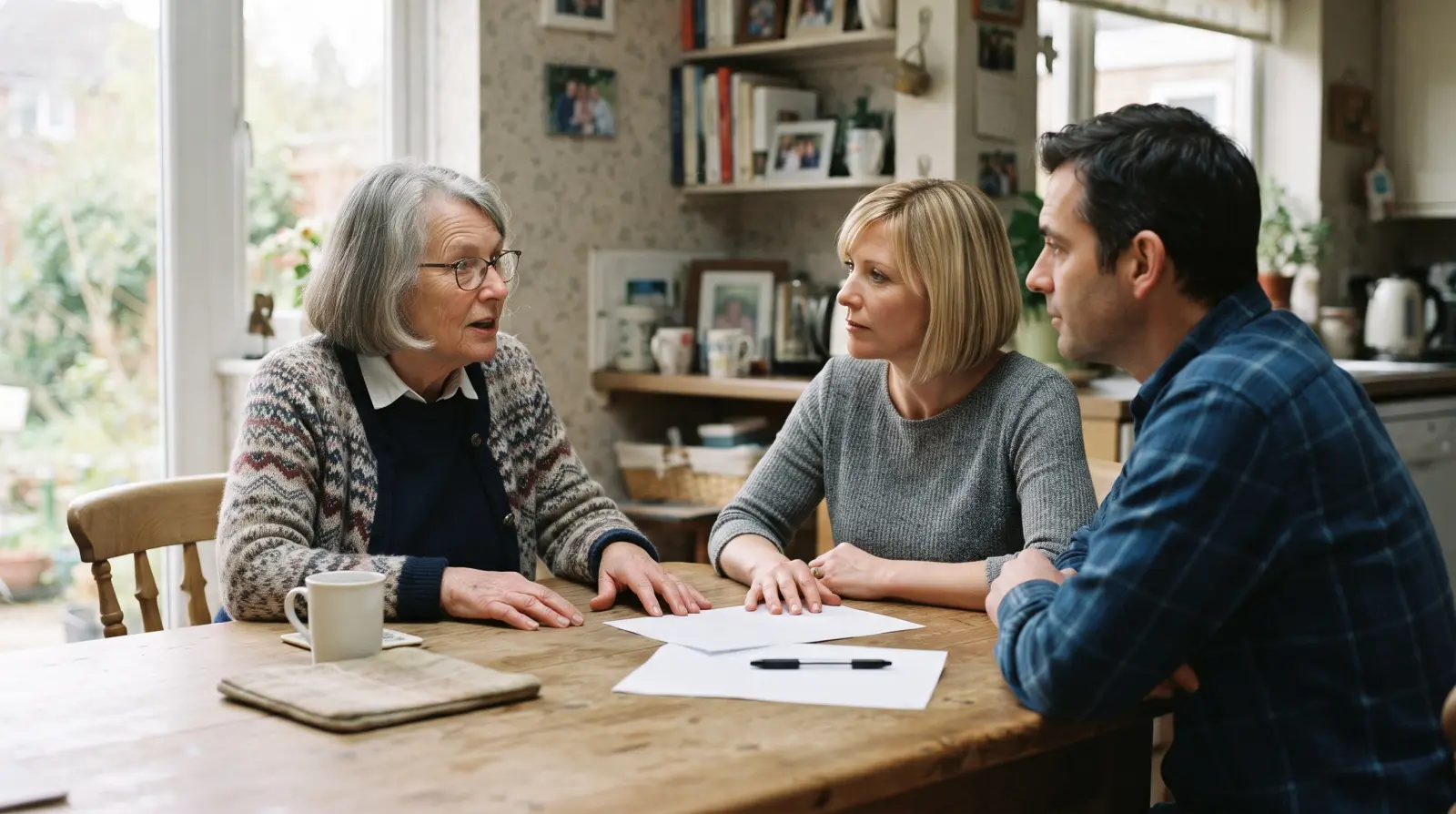
The call to the bank tends to go the same way. A daughter explains that her father has had a stroke, that the gas bill needs paying from his account and that she has his card and PIN. The adviser is polite but firm: without legal authority, she cannot run his account, however close the family is. That conversation is common, and almost always avoidable.
The document that would have changed it is a Lasting Power of Attorney, or LPA. It is cheap compared with the alternative, but it can only be made while the person is still able to make decisions. That is why it is far easier to arrange when nobody needs it yet.
What a Lasting Power of Attorney actually does
An LPA is a legal document in which you, the “donor”, choose one or more people, your “attorneys”, to make decisions on your behalf. You must be 18 or over and have mental capacity when you make it. You do not need to live in the UK or be a British citizen.
An LPA is legally binding only in England and Wales. Scotland and Northern Ireland have their own power of attorney systems, so anyone living there should check the arrangements for their nation. An LPA cannot be used until it has been registered with the Office of the Public Guardian (OPG).
The two types, and when each can be used
There are two separate LPAs, and you can make one or both.
- Property and financial affairs. Covers money and property: running bank accounts, paying bills, collecting benefits or a pension, and selling your home. Once registered, it can be used with your permission while you still have capacity, which helps if you find managing paperwork difficult.
- Health and welfare. Covers personal decisions such as your daily routine, medical care, moving into a care home and, if you choose, life-sustaining treatment. It can only be used when you are unable to make your own decisions.
Many people make both at the same time, naming the same attorneys or different ones for each.
Why timing matters more than anything else
The key rule is that the donor must have mental capacity when they make the LPA. If dementia, a stroke or a serious illness takes that away first, an LPA can no longer be made. Families then usually have to apply to the Court of Protection for someone to be appointed as a “deputy”, which is slower, more expensive and involves ongoing supervision.
| Route | Fees involved | First-year cost |
|---|---|---|
| Margaret registers both LPAs while well | 2 × £92 application fee | £184 |
| Her son applies to be a property and affairs deputy after she loses capacity | £432 application, £100 assessment, £320 general supervision | £852 |
| Deputyship if the court also orders a hearing | As above, plus £266 hearing fee | £1,118 |
Official fees only, excluding any solicitor costs. The general supervision fee of £320 is charged each year; some deputies managing less than £21,000 pay a £35 minimal supervision fee instead.
The difference is not only money: a deputy is appointed by the court, while an attorney is someone you chose yourself.
What it costs to register in 2026
The OPG application fee to register an LPA is £92 per document, so £184 for both types. It rose from £82 for applications received from 17 November 2025. The fee can be paid by card or cheque.
- Reduced fee: if the donor’s income before tax is under £12,000 a year, they pay half, so £46 per LPA.
- Exemption: donors on certain means-tested benefits may pay nothing. The qualifying benefits are listed on the OPG’s fee form (LPA120). Donors on Universal Credit are assessed for the reduced fee instead of an exemption.
- Repeat application: if the OPG finds a correctable mistake, you may be able to fix it and reapply within 3 months for £46.
You do not need a solicitor. Many people make an LPA themselves using the official GOV.UK forms or online tool. There is no charge for using the service itself; the OPG registration fee is the only official cost.
Making and registering one, step by step
- Choose your attorneys, who must be 18 or over, and decide whether they must agree on every decision (“jointly”) or can also act alone (“jointly and severally”). You can name replacement attorneys too.
- Fill in the forms, either through the online service on GOV.UK or using the paper forms you can download and print. The online route still ends with you printing the forms to sign.
- Sign it, along with your attorneys, witnesses and a “certificate provider”, who confirms you are making it by choice and understand it. Everyone must sign the same original document.
- If you named people to be told, send them the notification form (LP3). They have 3 weeks to raise concerns.
- Send the LPA to the OPG with the fee or a fee reduction application.
GOV.UK says registration takes 8 to 10 weeks if there are no mistakes, and is usually quicker if you make the LPA and pay online. Errors in signing or dating are a common cause of delay.
What is changing with the digital service
The Powers of Attorney Act 2023 allows the largely paper-based system to be replaced with a fully digital process, including identity checks on the people involved. As of 28 October 2026, legislation.gov.uk still lists the main section of the Act as not yet in force, and the government has not published a confirmed launch date for the new process. For now, the forms are completed online or on paper and then signed by hand.
One digital part is already running. Once an LPA is registered, donors and attorneys can use the OPG’s online Use a lasting power of attorney service to give banks, healthcare providers and other organisations a secure access code to view its details. Signing in uses a GOV.UK One Login account. The OPG reported in April 2025 that two million LPAs had been added since the service launched in July 2020.
 Worth knowing
Only use the official GOV.UK and OPG services for an LPA. Websites that charge to “register” an LPA for you are not the OPG, and the official fee is paid to the OPG directly.
Who should think about this, and what to check
- Anyone over 50 with no LPA, particularly if they live alone or their partner would struggle to manage the household finances.
- Couples who assume a husband or wife can automatically take over the other’s accounts and pension.
- Families where someone has early memory problems: an LPA may still be possible while they can understand it, but not once that ability is lost.
An attorney can deal with DWP on the donor’s behalf, for example over Attendance Allowance or the State Pension payments that change each April. If you already hold an older LPA, check that the attorneys you named are still willing and able to act.
A job for a quiet afternoon
An LPA costs £92 per document to register in 2026, less for people on low incomes, and nothing for some benefit claimants. Without one, families may face a court process costing several times as much. The new fully digital system is not yet live, so today the route is the GOV.UK forms, signed by hand and registered with the OPG.
Official sources
- GOV.UK: Make, register or end a lasting power of attorney: The two LPA types, who can make one, registration time
- GOV.UK: Power of attorney fees: £92 fee from 17 November 2025, remission and exemption rules
- GOV.UK: Become a deputy – fees: Court of Protection and OPG deputyship fees
- legislation.gov.uk: Powers of Attorney Act 2023, section 1: Digital LPA provisions not yet in force
Please noteWe Are Apacc is an independent, sponsored information site published by PushImpact OÜ. We are not a government website and are not affiliated with the Department for Work and Pensions (DWP), HM Revenue & Customs (HMRC) or the Pension Service. This article is general information, not personal financial, legal or tax advice. Every amount is either a published official figure with its date or a clearly labelled illustration; none of them is a promise or an estimate of what you personally will receive or pay. The figures were checked on 28 October 2026 and can change. This site takes no applications, makes no decisions about entitlement and charges no fees. Never give your National Insurance number, bank details or Government Gateway or GOV.UK One Login credentials to a website you reached from an article. For your own case, use the official services on GOV.UK, including the Pension Service and HMRC contact pages.
Once a week, one money rule explained with its official source, from benefits and tax to savings and household bills, plus one date worth knowing. Free.