Advertisement · Sponsored content by PushImpact OÜ
Why the annual State Pension increase does not look the same on every payment
A higher State Pension rate took effect across the UK in April 2026. Both full standard rates rose by 4.8%, yet that percentage does not tell every recipient how much their own payment has changed. The explanation lies in a part of the pension system that is easy to miss: not everyone is receiving the same kind of State Pension.
When a pension increase makes the news, the headline generally contains one percentage and a large number of people. It makes the change sound uniform. But anyone checking a personal pension payment may find that the increase is a different cash amount from the one quoted in an article or government announcement.
That does not necessarily indicate a mistake. The State Pension has different systems, and within each system the amount a person receives is shaped by their history. The 2026/27 increase began on 6 April 2026, but it updated existing entitlements rather than creating an identical extra payment for everyone.
The government’s announcement said more than 12 million pensioners were due to see higher State Pension payments. The size of that audience explains why the change received national attention. It does not mean all 12 million people receive the full standard rate, nor that every payment contains exactly the same extra amount.

First, there is more than one State Pension
The phrase “the State Pension” covers arrangements that are not interchangeable.
The new State Pension generally applies to people who reach State Pension age on or after 6 April 2016. Its full standard rate, from April 2026, is £241.30 per week. A person’s own entitlement depends on their National Insurance record and the transitional rules that apply to them. The published full amount is a reference rate, not a guarantee for everyone in this system.
The basic State Pension forms part of the older State Pension system, which generally applies to people who reached State Pension age before April 2016. Its full basic rate is now £184.90 a week. Some recipients of the older system also have an Additional State Pension or other elements alongside their basic amount.
Both full standard rates were raised under the annual review. But comparing a full new State Pension rate with a basic State Pension figure, without checking which system applies, is not a fair assessment of anyone’s award.
This helps explain why two people living on the same street might discuss the same national pension rise and report noticeably different figures. Their starting amounts and the components of their pensions may differ.
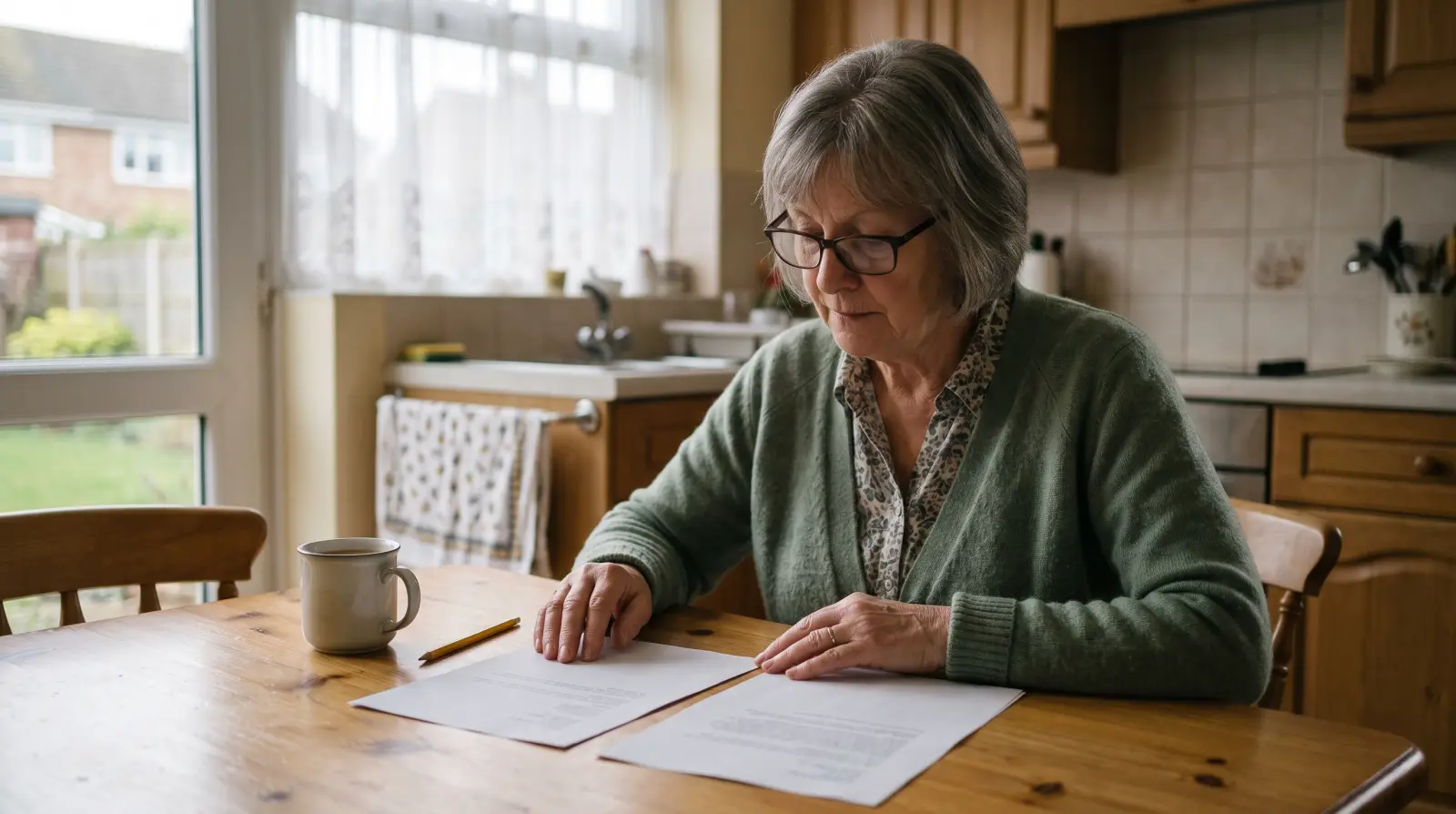
The April increase was 4.8% — but on which part?
The change came from the Triple Lock, the annual mechanism used to determine the uprating of the basic and full new State Pension rates. Its three reference points are average earnings growth, price inflation measured by the CPI, and a minimum of 2.5%. The highest applicable measure is used. For 2026/27 the relevant earnings growth figure was 4.8%.
That lifted the full new State Pension rate from £230.25 to £241.30 a week, and the full basic rate from £176.45 to £184.90. The new rate represents a difference of £11.05 per week at the full new State Pension level and £8.45 per week at the full basic rate.
Here is the part often missed in a broad headline: not every State Pension component uses the same uprating percentage. For 2026/27, government tables show a 3.8% increase for certain additional or protected elements. If a person’s award includes one of those elements, applying 4.8% to the whole amount could give the wrong answer.
The underlying pension breakdown is therefore at least as important as the national percentage. This is a comparison of legislated rates, not a new entitlement that must be claimed.
Why a big annual figure can be misleading for one household
The Department for Work and Pensions described the April rise as worth up to approximately £575 a year for a person on the full new State Pension rate. That figure follows from an arithmetic comparison: the full weekly rate is £11.05 higher, and £11.05 over 52 weeks is £574.60.
But not every recipient starts at £230.25 a week, and not every award is composed of a single component. A recipient on a different weekly rate cannot simply assume £574.60 was added to their pension. The figure is a benchmark showing the difference between official full rates over a complete year at those rates.
Equally, the 2026 increase is not a £575 cheque, a lump-sum refund or a payment held by an advertiser. A person’s entitlement is paid through the normal State Pension arrangements. No external website can unlock an annual pension uprating.
The same caution applies to a bank-statement comparison. Deposits can cover different weeks. Looking only at the amount received on a particular calendar date may not reveal how the weekly award changed.
A pension record can matter as much as the headline rate
For someone receiving the new State Pension, the National Insurance record is central. It influences the amount built up, while some pre-2016 circumstances, including periods of contracting out, can affect the calculation. Two people who reach retirement at similar times need not have identical awards.
For the older system, basic and additional pension amounts may sit alongside one another. A published figure for the full basic rate should not be mistaken for a statement of the recipient’s total State Pension income. When a headline discusses the 4.8% rise, it is important to identify which portion of the award the percentage describes.
None of this changes the fact that the uprating is real. It explains why a national statistic cannot replace an individual calculation.
That is why a single headline figure can be accurate nationally yet insufficient for calculating a particular payment.
What to look at before deciding whether the rise is reflected
Instead of asking only whether the bank deposit looks larger, a more useful approach is to start with the official weekly rate shown in a pension award or payment explanation. The details that matter most are straightforward:
Which State Pension applies? A new State Pension award and an older basic State Pension award should not be compared as though they were the same benefit.
Does the payment contain other elements? An additional or protected component may have its own uprating rules. A person with a mixed award may see a total change that differs from a simple 4.8% calculation.
What period does the payment cover? State Pension is commonly paid every four weeks, not as twelve equal calendar-monthly payments. Timing should be taken into account before calculating a change from the bank balance alone.
Is the figure gross entitlement or household spending money? The State Pension is taxable income, although tax is generally handled through other income or tax arrangements rather than deducted directly by the Pension Service. Overall household circumstances can therefore influence how an uprating feels financially.
For people already receiving a pension, a query about the actual award is best directed to the Pension Service, using official GOV.UK contact routes. People who have yet to reach State Pension age can check a forecast through the government service, which provides information based on the record available and the applicable rules.

The part that does not require an application
The 2026 State Pension uprating is not an invitation to apply for a newly launched benefit. It is part of the existing annual process of updating eligible pension rates. A website promising to arrange the increase in exchange for personal or banking details should not be confused with an official government service.
There is also no reason to treat this April’s change as though it suddenly creates an identical payment for everyone in Britain. The government’s population estimate refers to pension recipients whose payments are affected by uprating. It is not the whole UK population, and it is not a list of new benefit claimants.
What the April change actually tells us
The strongest conclusion is also the simplest: the full new and basic State Pension rates increased by 4.8% in April 2026, and millions of people receive pensions under arrangements affected by that annual increase. The published new full rates are £241.30 and £184.90 per week, respectively.
For an individual, though, the right number is the one attached to their own entitlement and pension components. That is why a single headline figure can be accurate nationally yet insufficient for calculating a particular payment.
Understanding that difference turns a widely reported annual pension rise into information someone can actually use, without confusing a routine increase with a new bonus or guarantee.
Official sources
- Department for Work and Pensions — Over 12 million pensioners to receive £575 State Pension boost (4 April 2026) — scale, effective date and official full-rate differences.
- GOV.UK — Benefit and pension rates 2026 to 2027 — standard pension and protected/additional component rates.
- House of Commons Library — Benefits Uprating 2026/27 — basis for the Triple Lock 2026/27 increase.
- GOV.UK — The new State Pension: what you’ll get — entitlements under the newer system.
- GOV.UK — The basic State Pension: how much you get — explanation of the older system.
Independent sponsored information, not an official DWP or Pension Service notice. Nothing on this page creates pension entitlement, accepts applications or guarantees an individual increase. The Pension Service and official GOV.UK records should be used for personal questions.
 Please note
We Are Apacc is an independent, sponsored information site published by PushImpact OÜ. We are not a government website and are not affiliated with the Department for Work and Pensions (DWP), HM Revenue & Customs (HMRC) or the Pension Service. This article is general information, not personal financial, legal or tax advice. Every amount is either a published official figure with its date or a clearly labelled illustration; none of them is a promise or an estimate of what you personally will receive or pay. The figures were checked on 28 October 2026 and can change. This site takes no applications, makes no decisions about entitlement and charges no fees. Never give your National Insurance number, bank details or Government Gateway or GOV.UK One Login credentials to a website you reached from an article. For your own case, use the official services on GOV.UK, including the Pension Service and HMRC contact pages.
Once a week, one money rule explained with its official source, from benefits and tax to savings and household bills, plus one date worth knowing. Free.