What Stamp Duty costs for downsizers now the thresholds have dropped back
Since 1 April 2025 Stamp Duty in England and Northern Ireland has started at a lower price again. Here is how the bands work today, what a downsizing move can cost, when the 5% surcharge applies and how the 14-day deadline fits in.
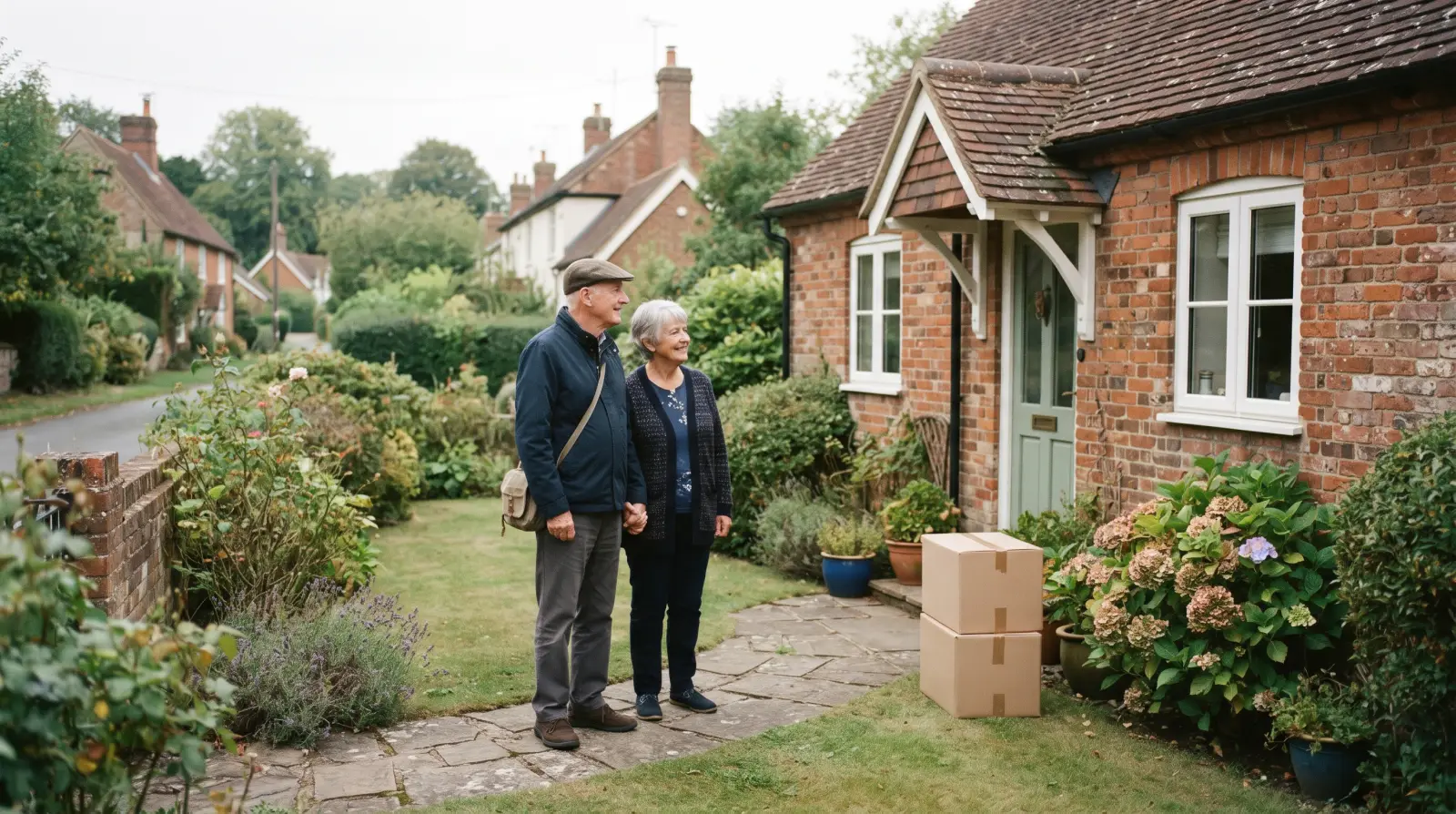
The house that raised three children has four bedrooms, a garden that takes a whole Saturday to mow and stairs that feel steeper every winter. A two-bedroom bungalow nearer the shops looks sensible on paper. Then the solicitor’s quote arrives, with a Stamp Duty line several thousand pounds higher than the couple next door paid for a similar move a couple of years earlier.
Nothing has gone wrong. The thresholds that were raised in September 2022 were always temporary, and they ended on 31 March 2025. Anyone buying a home in England or Northern Ireland now pays under the older, lower starting points, and for many downsizers that means a bigger bill than friends and neighbours remember.
What changed on 1 April 2025
From 23 September 2022 to 31 March 2025, the point at which Stamp Duty Land Tax (SDLT) began on a home was £250,000. First-time buyers paid nothing on the first £425,000, and their relief applied to homes costing up to £625,000.
Those were temporary figures set in law with an end date. From 1 April 2025 they returned to their pre-September 2022 levels: £125,000 for the standard nil-rate band, £300,000 for the first-time buyer nil-rate band and £500,000 for the first-time buyer price cap. For an ordinary purchase completing today, the lower thresholds are the ones that count.
The Budget published on 28 October 2026 did not announce any change to the residential rates, so the bands below remain the current position.
The bands that apply today
SDLT is charged in slices, like Income Tax. Each rate applies only to the part of the price that falls inside its band, not to the whole price.
| Part of the price | Rate |
|---|---|
| Up to £125,000 | 0% |
| £125,001 to £250,000 | 2% |
| £250,001 to £925,000 | 5% |
| £925,001 to £1.5 million | 10% |
| Above £1.5 million | 12% |
These rates apply when the home you are buying will be the only residential property you own once the purchase completes. Different rules apply to first-time buyers, additional properties and buyers who are not UK resident.
How the bill adds up on a downsizing move
Because the 2% band now runs from £125,001 to £250,000, a buyer pays up to £2,500 more than under the temporary thresholds. Above £250,000 the gap stays at exactly £2,500, since that is 2% of the £125,000 slice that used to be tax-free.
| Buyer and price | SDLT now | Under 2022–25 thresholds |
|---|---|---|
| Maureen, flat at £200,000 | £1,500 | £0 |
| Brian and Sue, bungalow at £300,000 | £5,000 | £2,500 |
| Gwen, cottage at £450,000 | £12,500 | £10,000 |
Assumes each buyer sells their old home on or before the day the new purchase completes, so only the standard rates apply. Brian and Sue’s £5,000 is 2% of £125,000 (£2,500) plus 5% of £50,000 (£2,500).
None of these figures is a quote. A conveyancer works out the exact amount, and HMRC’s SDLT calculator on GOV.UK lets anyone check the arithmetic for themselves.
When the 5% surcharge catches a downsizer
The higher rates for additional dwellings add a surcharge, usually 5%, on top of every band. They apply where you will own more than one residential property after the purchase, and they are not reserved for landlords or second-home buyers. A downsizer who completes on the bungalow before the family home has sold is, on that day, the owner of two homes.
Take Keith, an invented buyer, paying £300,000 for a flat while his house is still on the market. His standard SDLT would be £5,000. With the 5% surcharge on the whole £300,000, another £15,000 is added, making £20,000 due within the deadline.
The rules do offer a way back. If the new home replaces your main residence and you sell the old one within three years of buying the new one, you can apply to HMRC for a refund of the higher-rate portion. The claim has to be made within 12 months of the later of the sale of the old home or the filing date of the new property’s SDLT return. The surcharge does not apply to a property worth less than £40,000.
 Worth knowing
Married couples and civil partners are treated as buying together, even if only one name is on the purchase. If either of you would pay the higher rates, the whole transaction is charged at those rates, unless you are permanently separated.
First-time buyers and the £500,000 cap
Many older readers meet these rules through children or grandchildren. First-time buyer relief now means 0% on the first £300,000 and 5% on the portion from £300,001 to £500,000. Above £500,000 the relief is not available at all, and the standard rates apply to the whole price.
On a £400,000 first home, for example, the relief gives a bill of £5,000, which is 5% of the £100,000 above £300,000. At £510,000 the relief falls away entirely and the standard rates apply instead.
Where SDLT applies, and the 14-day deadline
Stamp Duty Land Tax applies to purchases in England and Northern Ireland. Scotland has its own Land and Buildings Transaction Tax, and Wales has charged Land Transaction Tax since 1 April 2018. Each has its own rates, so a move across a border needs checking against the right tax.
An SDLT return must reach HMRC, and the tax must be paid, within 14 days of completion. A solicitor or conveyancer usually files the return and collects the money beforehand, but the legal responsibility sits with the buyer, and late filing or payment can bring penalties and interest. Buyers who are not UK resident usually pay a further 2% surcharge on residential property in England and Northern Ireland.
A downsizer who completes on the bungalow before the family home has sold is, on that day, the owner of two homes.
Who this matters for, and what to check
The change matters most to people buying in the £125,000 to £500,000 range, where the lower thresholds make the biggest difference relative to the price. Points worth checking before exchange:
- Whether the sale of your current home will complete on or before the purchase. If not, budget for the surcharge and diarise the refund window.
- Whether you or your spouse or civil partner owns any other residential property, including a share of an inherited home or a property abroad, since that can trigger the higher rates.
- Which tax applies: SDLT in England and Northern Ireland, LBTT in Scotland, LTT in Wales.
- That your conveyancer has the funds in time to meet the 14-day deadline.
Moving later in life often comes with other paperwork. Our guide to setting up a Lasting Power of Attorney covers one document many people sort out at the same time, and if the sale leaves a cash sum in the bank, the starting rate for savings explains how the interest may be taxed.
The figures worth keeping in mind
Standard SDLT now starts at £125,000, with 2% up to £250,000 and 5% from there to £925,000. First-time buyers pay nothing up to £300,000 on homes costing no more than £500,000. Owning two homes on completion day usually adds 5% across the board, refundable if the old main home sells within three years and the claim is made in time. The return and payment are due within 14 days. Checking HMRC’s own pages and calculator on GOV.UK costs nothing and gives a solid reference point before the solicitor’s figure arrives.
Official sources
- GOV.UK: Stamp Duty Land Tax: Residential property rates: Current bands, first-time buyer relief, 5% and 2% surcharges
- GOV.UK: Stamp Duty Land Tax: temporary increase to thresholds: Temporary thresholds and their end on 31 March 2025
- GOV.UK: Higher rates of Stamp Duty Land Tax: Replacing a main residence, refunds, married couples, £40,000
- GOV.UK: Stamp Duty Land Tax: Overview: England and NI only, LBTT, LTT, 14-day deadline
Please noteWe Are Apacc is an independent, sponsored information site published by PushImpact OÜ. We are not a government website and are not affiliated with the Department for Work and Pensions (DWP), HM Revenue & Customs (HMRC) or the Pension Service. This article is general information, not personal financial, legal or tax advice. Every amount is either a published official figure with its date or a clearly labelled illustration; none of them is a promise or an estimate of what you personally will receive or pay. The figures were checked on 28 October 2026 and can change. This site takes no applications, makes no decisions about entitlement and charges no fees. Never give your National Insurance number, bank details or Government Gateway or GOV.UK One Login credentials to a website you reached from an article. For your own case, use the official services on GOV.UK, including the Pension Service and HMRC contact pages.
Once a week, one money rule explained with its official source, from benefits and tax to savings and household bills, plus one date worth knowing. Free.